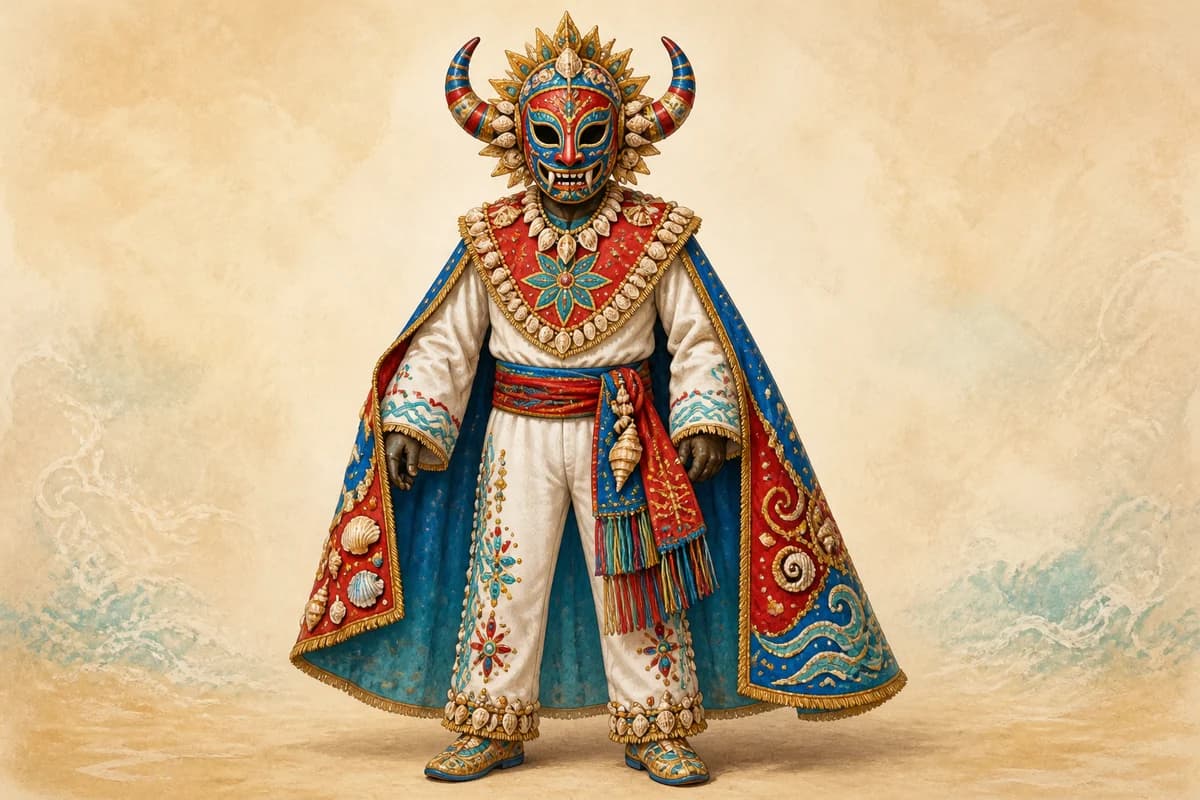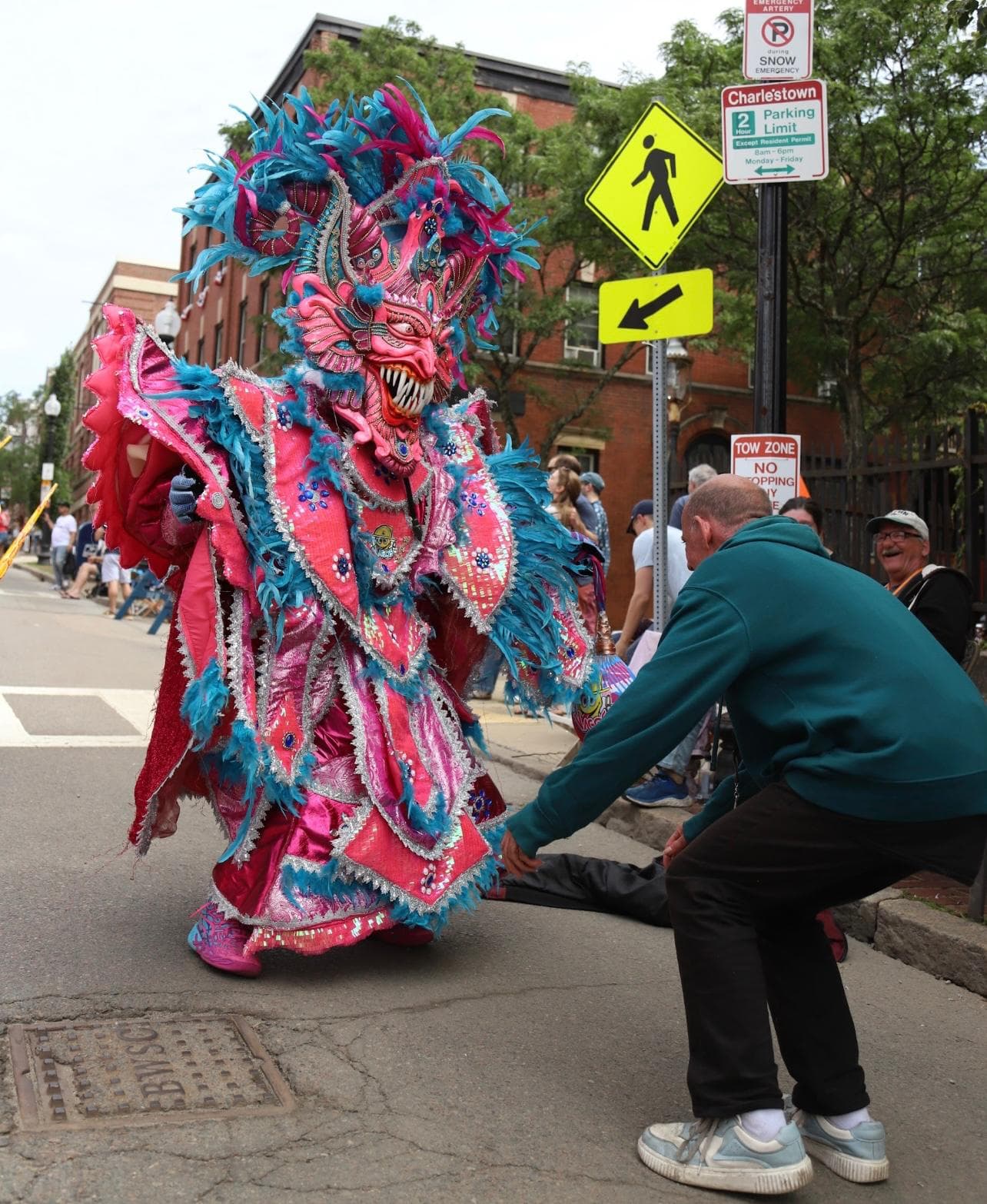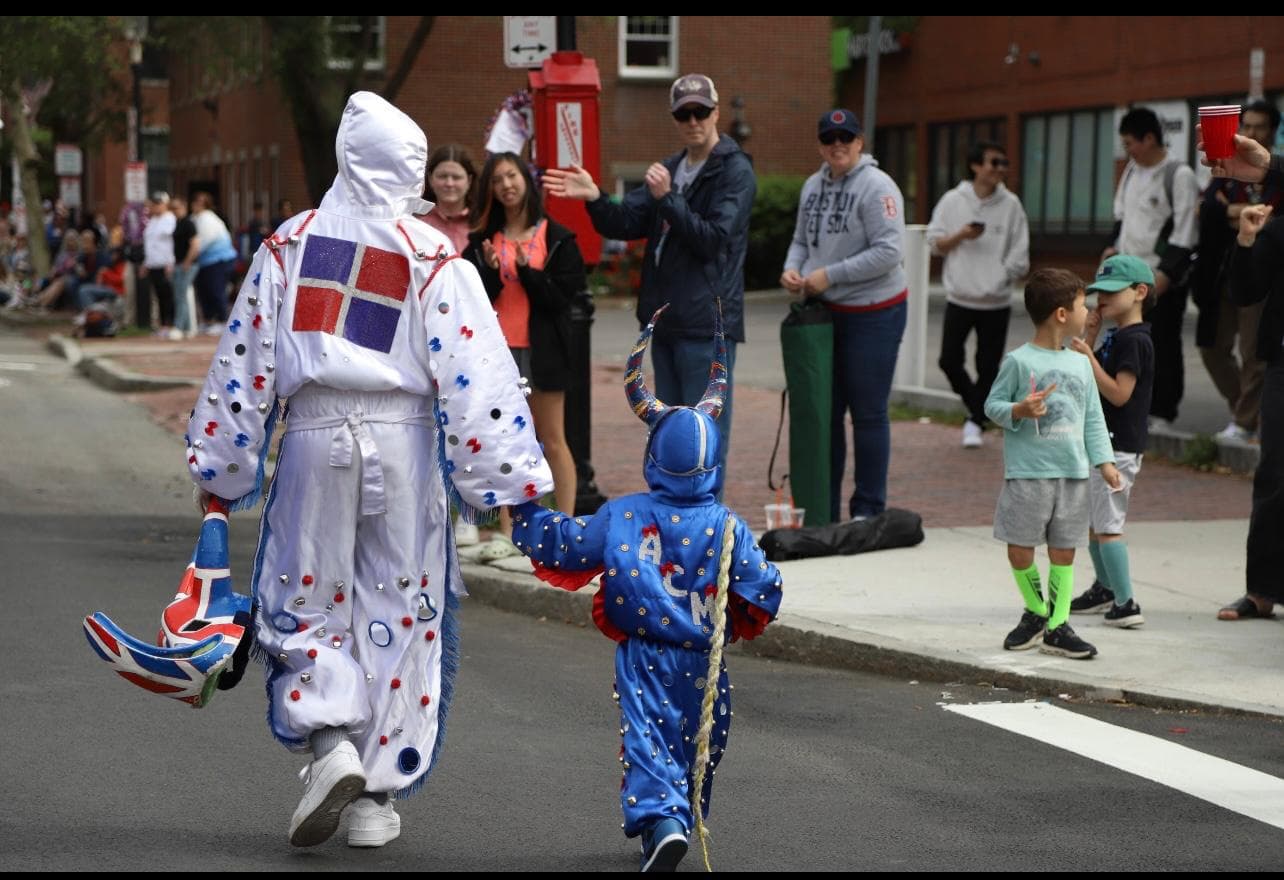
The story of the Asociación Carnavalesca de Massachusetts begins with a family tradition carried across borders. Long before ACM became a nonprofit cultural organization, Carnaval was already part of daily family knowledge: how a suit should be made, how a character should move, and why the tradition deserved to remain visible in a new home.
From Santiago de los Caballeros to Lawrence, Massachusetts, the Mirabal family helped turn that knowledge into a community resource—one that now reaches audiences through performances, exhibitions, workshops, and education.
Carnaval as family knowledge
Stelvyn Mirabal was born in Santiago de los Caballeros, one of the Dominican Republic’s most important Carnaval centers. His connection to the tradition came through his family. An uncle introduced him to Carnaval, while his father, Rafael, worked as a tailor and made Carnaval suits.
That combination of performance and craft matters. Carnaval was not simply an event the family attended once a year. It was something built, worn, practiced, discussed, and shared. The knowledge lived in hands as much as in stories.
When Stelvyn arrived in the United States, he joined the folkloric dance group at Club Los Trinitarios. That offered a way to continue practicing Dominican traditions while building relationships in the growing Dominican community of Lawrence.
A comparsa for Lawrence
Around 2000, Stelvyn saw a need for stronger representation of Dominican folkloric traditions in Lawrence’s Dominican Parade. He organized a comparsa—a performing carnival group—to bring those traditions directly into the celebration.
The early group was informal and deeply connected to the Mirabal family. Costumes, performance knowledge, and the willingness to participate all came together around a shared purpose: the community should be able to see and experience its culture, not only remember it from a distance.
What began as a family-centered comparsa continued to grow. More performers, partners, and community opportunities transformed the group into the Asociación Carnavalesca de Massachusetts.
From performance group to cultural organization
Today, ACM preserves and celebrates Dominican Carnaval through several connected forms of work:
- Live Carnaval performances and parade appearances
- Cultural exhibitions of masks, suits, and visual art
- Interactive demonstrations of character movement and whip-cracking
- Mask-making and arts workshops
- Educational presentations for students, families, and community organizations
- Partnerships that connect Dominican heritage with the broader cultural life of Massachusetts
Each format reaches people differently. A parade introduces Carnaval through sound, color, and motion. An exhibition lets visitors study construction and detail. A workshop gives students the experience of creating something with their own hands. Together, these activities turn cultural preservation into participation.
A new generation carries the work forward
The Mirabal family’s story is also a story of continuity. Leonardo Mirabal, Stelvyn’s son, grew up within the same living tradition and became ACM’s executive director in 2024.
His vision expands ACM’s educational work through interactive arts experiences where students can encounter Dominican culture through song, visual art, movement, and dance. That direction builds on the organization’s original purpose while creating new ways for younger audiences to participate.
Leadership across generations does not mean preserving Carnaval unchanged behind glass. It means protecting the knowledge at its center while giving each generation meaningful ways to use it.
Why this work belongs in Massachusetts
For Dominican families in New England, cultural traditions can create a bridge between places and generations. A child may first encounter a Lechón or Diablo Cojuelo not in Santiago or La Vega, but in a Massachusetts classroom, gallery, festival, or parade.
That first encounter can still be grounded in accurate names, regional history, and skilled performance. It can invite questions from people who know the tradition well and from those seeing it for the first time.
ACM’s work makes that exchange possible. It treats Dominican Carnaval as a living contribution to the cultural landscape of Massachusetts—one that deserves space, context, and opportunities to grow.
Bring the story into your community
ACM continues to build partnerships with schools, libraries, arts organizations, municipalities, festivals, and community groups. Every presentation creates another place where Dominican cultural knowledge can be seen, heard, and practiced.
Learn more about ACM’s history and team, explore the traditions of Dominican Carnaval, or invite ACM to your community.