Before a Dominican Carnaval mask can leap, spin, or command a parade route, it must be imagined and built by hand. The finished object may look effortless in motion, but it represents many hours of shaping, layering, drying, smoothing, painting, and decorating.
Mask-making is both a craft and a form of cultural knowledge. The maker must understand not only how to build a strong, wearable form, but also which shapes, colors, and details belong to the character and community being represented.
Step 1: Shaping the mold
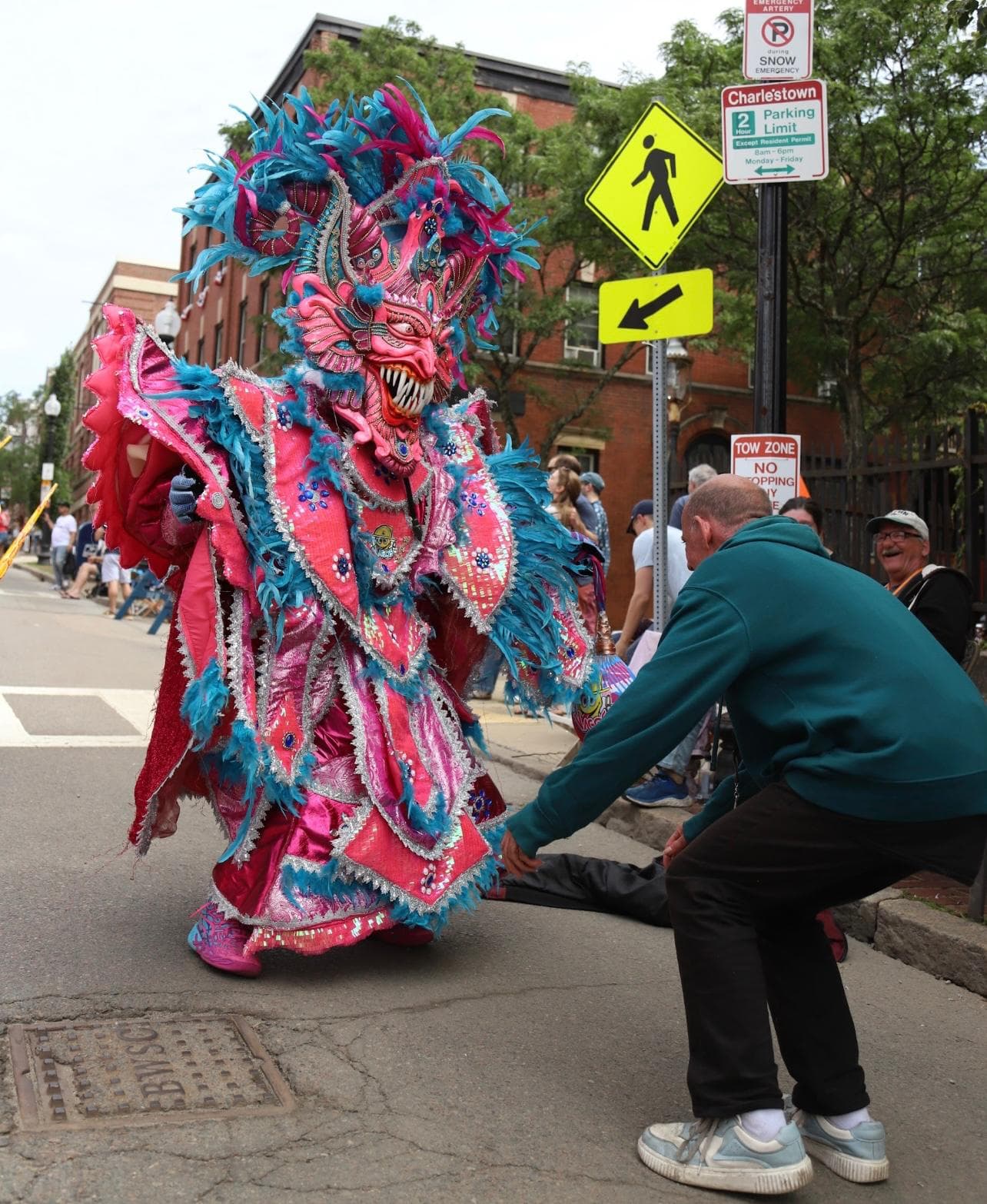
Many traditional masks begin with a mold formed in clay. The maker establishes the face first: the brow, nose, cheeks, mouth, and the overall proportion of the mask. Character-specific features are then exaggerated. A Lechón needs its recognizable snout. A Diablo Cojuelo may rise into several horns and fantastic animal forms.
This stage determines how the finished mask will read from a distance. Carnaval happens in streets, gyms, schools, galleries, and festival spaces, so a strong silhouette matters. The character should remain recognizable even when the performer is moving quickly.
Step 2: Building with papier-mâché
Once the mold is ready, strips or pieces of paper are layered across its surface with adhesive. Each layer strengthens the form. The maker must work carefully around curves, edges, horns, and raised details so that the paper follows the shape without leaving weak points.
Papier-mâché gives the mask an important balance: it can be sculptural enough to create dramatic volume while remaining light enough to wear. The exact number of layers and reinforcement methods can vary according to the size of the mask and the traditions of its maker.
Step 3: Drying, releasing, and smoothing
Drying cannot be rushed. Moisture trapped between layers can weaken the structure or damage the surface. When the shell is fully dry, it is carefully separated from the mold and inspected.
The edges are trimmed, openings are prepared, and rough areas are sanded or smoothed. At this stage, the maker can reinforce stress points and consider practical questions: Where will the performer see? How will the mask sit on the head? Can it remain secure while jumping or dancing?
The best masks unite sculpture with movement. A beautiful object that cannot be worn safely has not yet completed its purpose.
Step 4: Painting the character
Painting turns the structure into a personality. Makers may use intense contrasts, repeated patterns, dots, lines, metallic effects, or gradients that emphasize the form of the face and horns. Color can help identify a troupe, a neighborhood style, or an artist’s individual approach.
The surface is usually built in stages: a base color, major areas of contrast, smaller patterns, outlines, and finishing details. Because the mask will be seen in sunlight, stage lighting, and photographs, the artist considers how colors behave in several environments.
Step 5: Adding ornament and sound
The mask may be finished with fabric, ribbons, stones, sequins, mirrors, feathers, shells, or other decorative elements. These materials catch light and respond to motion. On the complete costume, bells or shells can also make the performer audible before the crowd has a clear view.
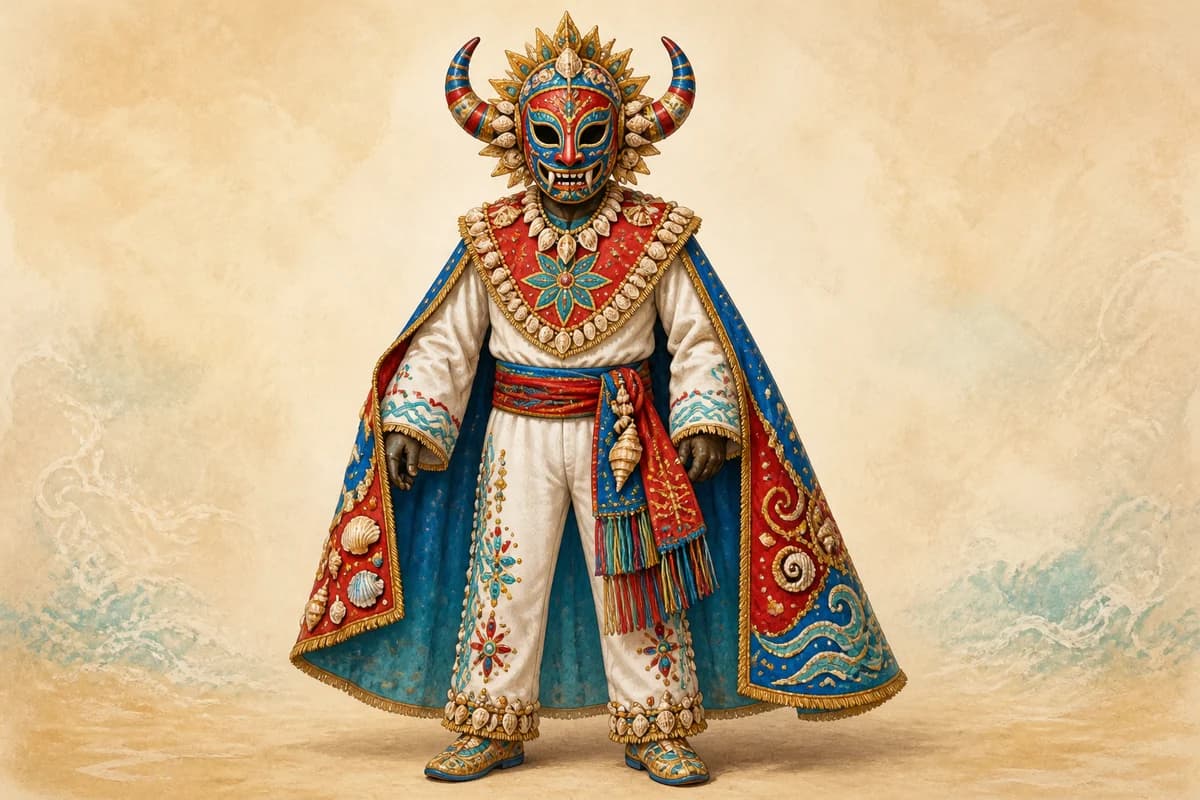
Decoration is never simply a matter of adding as much as possible. Each choice should support the character. Puerto Plata’s Taimáscaros use seashells to express the coastal identity of the city. Guloya attire incorporates mirrors, ribbons, bells, and tall feathered headdresses. Regional detail gives a costume its cultural address.
A mask becomes complete through performance
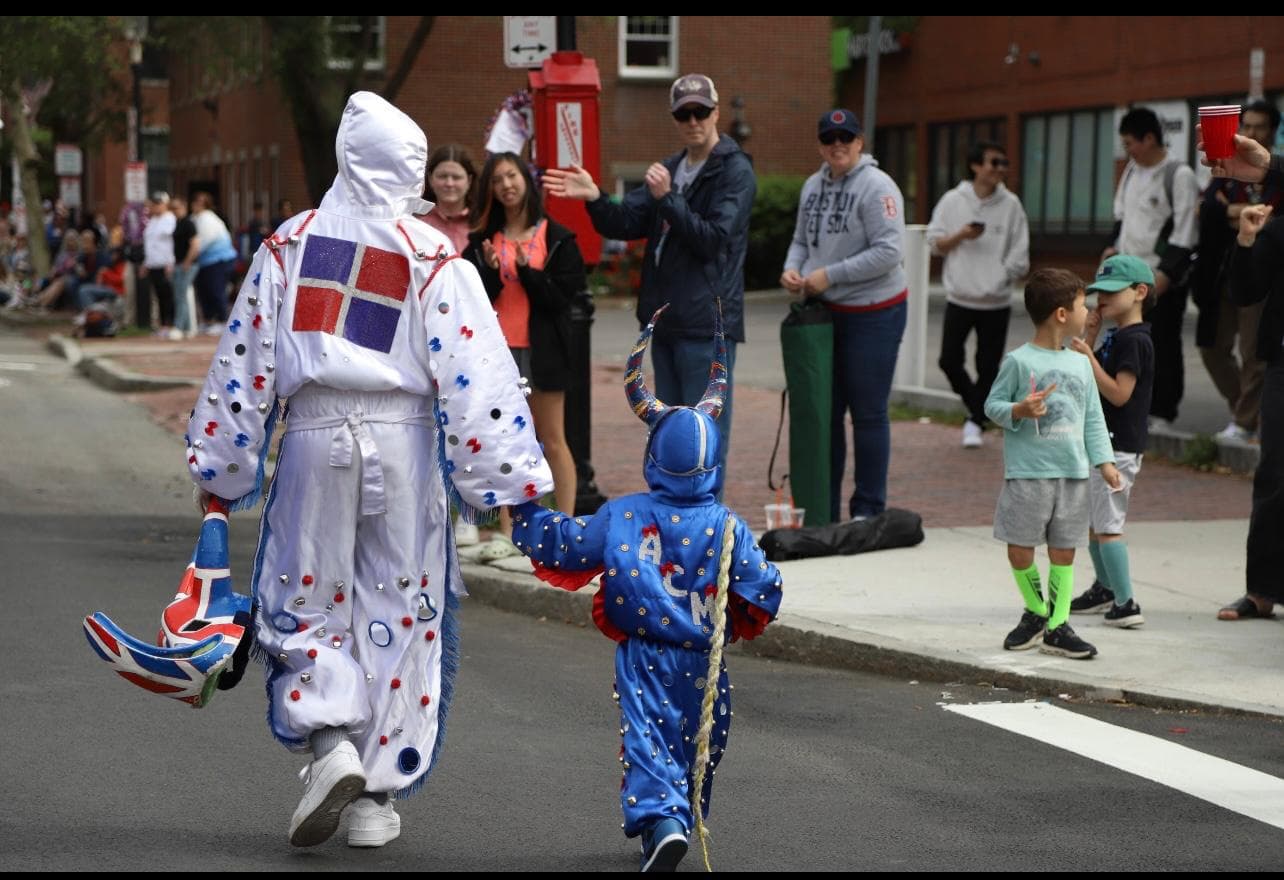
A finished mask can be displayed as a work of art, but Carnaval gives it another life. The performer learns how to balance its weight, see through its openings, coordinate it with the suit, and move in the character’s vocabulary.
A Lechón’s grounded authority, a Diablo Cojuelo’s leaping playfulness, and a Guloya’s dance-drama movement are not interchangeable. The performer completes the work started by the maker.
The mask is not only something a performer wears. It is a structure for carrying history, place, sound, and movement together.
Learning the craft with ACM
ACM shares Dominican Carnaval through exhibitions, demonstrations, and hands-on educational experiences. A mask-making workshop can introduce students to sculpture, pattern, color, performance, and Dominican cultural geography within one connected project.
Explore the complete Dominican Carnaval cultural map, or contact ACM about a workshop for your school, library, arts organization, or community program.