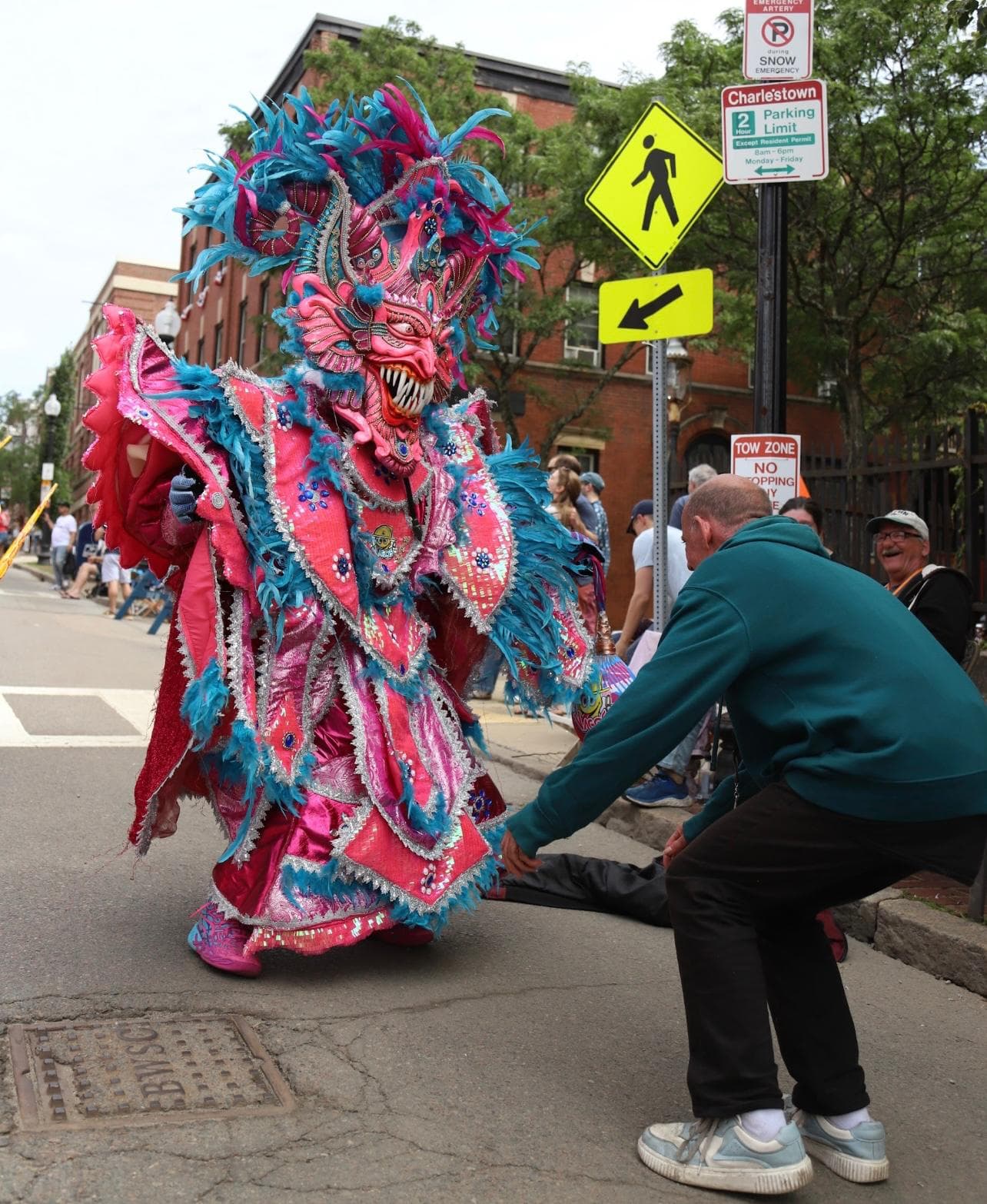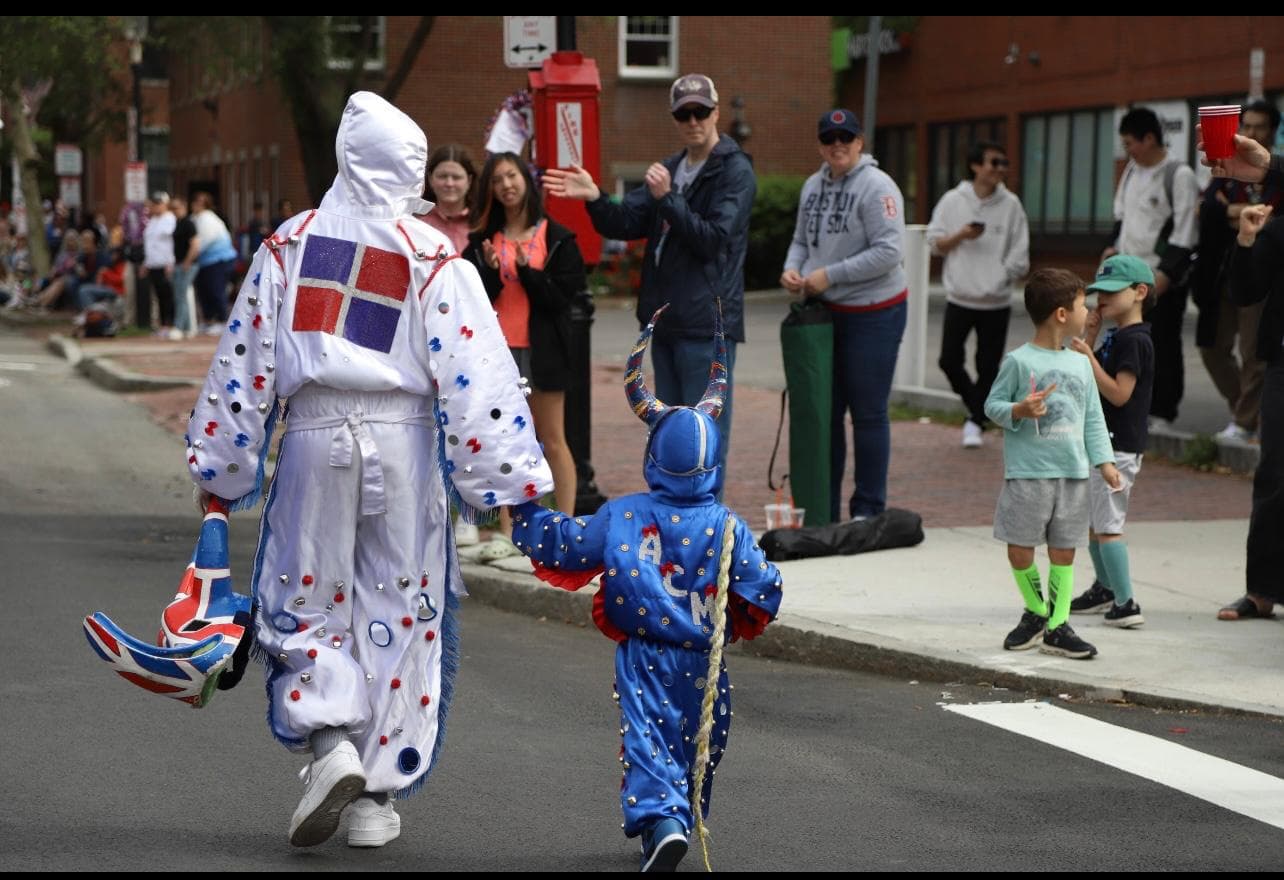
Dominican Carnaval does not have one costume, one rhythm, or one way of moving. Every region brings its own history to the celebration. A character’s mask might recall the animals of a farming community, the sea along the northern coast, the memory of migration, or a neighborhood rivalry carried forward by generations.
Together, these traditions form a living cultural map. The seven characters below offer a starting point for understanding how place shapes Dominican Carnaval—and why preserving those differences matters.
One country, many Carnaval identities
Carnaval is celebrated across the Dominican Republic, but regional communities do more than reproduce a national style. They create recognizable characters through local materials, stories, music, and performance. Some appear during February. Others follow a different ceremonial calendar, including Holy Week or the Christmas season.
That variety is one of Carnaval’s greatest strengths. It allows a costume to act as art, memory, and a declaration of where its wearer comes from.
Lechones of Santiago
The Lechones are among the most recognizable figures of Santiago de los Caballeros. Their masks typically have a pig-like snout, high horns, and brilliantly painted surfaces. The design connects the character to a region long associated with pig farming while transforming that familiar animal into something theatrical and commanding.
Santiago’s neighborhoods also maintain distinct styles. The Pepinero and Joyero traditions can be recognized through differences in the form and decoration of their masks and suits. A Lechón may carry a whip made from sisal rope, cracking it to announce the character’s presence and help protect the parade route.
Diablos Cojuelos of La Vega
La Vega’s Diablo Cojuelo, or “limping devil,” is known for elaborate papier-mâché masks that rise into multiple horns and fantastic animal-like shapes. Capes, shirts, and loose trousers are decorated with rows of bells, making sound part of the costume whenever the performer runs, jumps, or pivots.
The character combines spectacle with satire. Rather than remaining still like an object in an exhibition, the Diablo Cojuelo comes alive through playful pursuit, sudden leaps, and interaction with the crowd. The movement is as important as the mask.
Taimáscaros of Puerto Plata
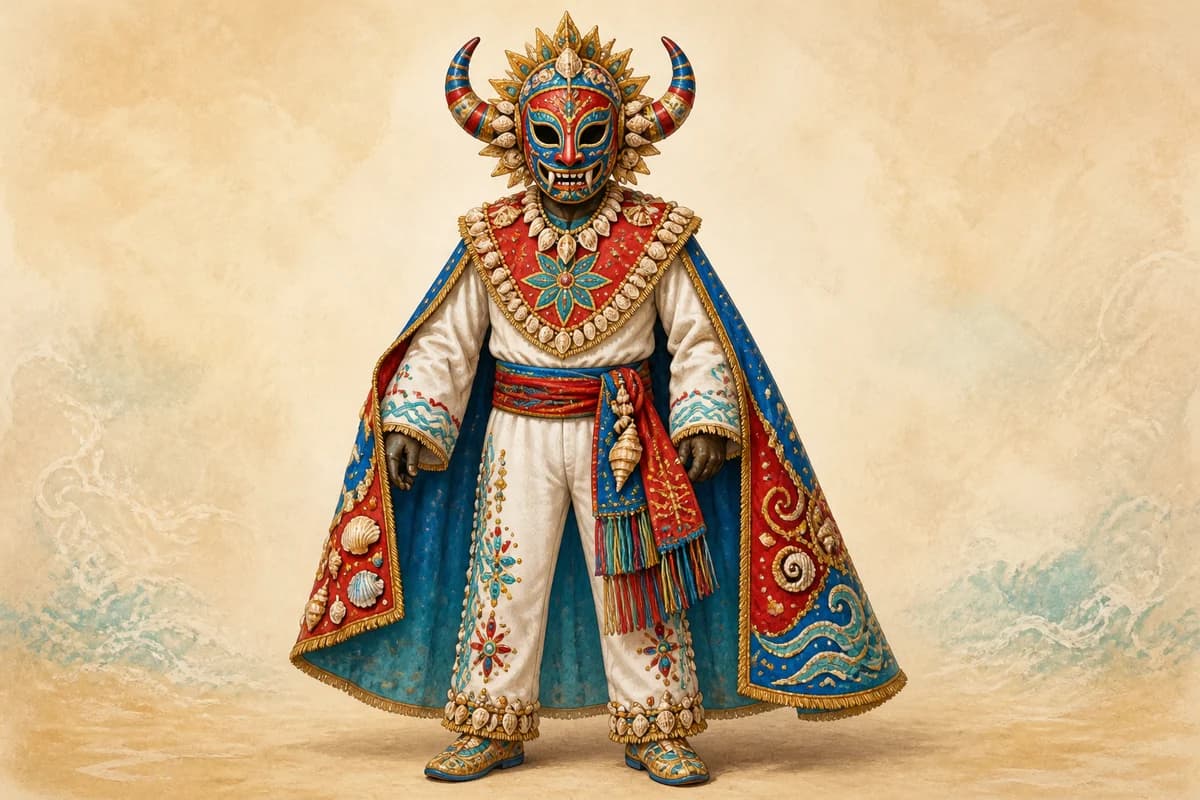
Puerto Plata’s Taimáscaro developed as a distinct carnival identity around 1991. Its name joins a reference to Taíno ancestry with the masked figure, while the complete character brings together Taíno references, Spanish masked-devil traditions, African music and movement, and the coastal identity of Puerto Plata.
The costume is organized around trousers, a shirt, cape, bib, sash, and sculpted mask. Seashells replace the bells found on many other Dominican Carnaval costumes, turning the sound and texture of the northern coast into part of the design. The Dominican Ministry of Culture describes the Taimáscaro as central to Puerto Plata’s contemporary carnival identity.
Toros y Civiles of Montecristi
Montecristi’s Carnaval centers on encounters between masked Toros and unmasked Civiles. The Toro wears a papier-mâché mask with a distinctive pig-like snout and a bright, heavily padded suit. That padding is not simply decorative: it protects the performer during ritualized exchanges involving whips.
The encounter follows community rules. Civiles challenge the Toros, but strikes to the unprotected face are prohibited. What appears chaotic is actually a carefully understood performance with roles, limits, and a strong sense of local identity. The Montecristi City Council documents these relationships and costume features as central parts of the city’s tradition.
Las Cachúas of Cabral
In Cabral, Barahona, Carnaval arrives during Holy Week through a tradition known as Carnaval Cimarrón. Its central figures are the Cachúas, whose winged green and red suits may display a black cross and carry bells and mirrors. Their dramatic masks rise into horns with a mane of multicolored paper falling behind them.
Cachúas also carry natural-fiber whips and move through processions and community rituals with a powerful visual presence. Cabral has maintained the tradition for more than a century, connecting contemporary performance with community memory and the region’s history. A historical record from the Senate of the Dominican Republic preserves many of its identifying details.
Los Guloyas of San Pedro de Macorís
The Guloyas carry the Cocolo dance-drama tradition of San Pedro de Macorís. It emerged among descendants of workers who migrated from the British Caribbean to Dominican sugar communities. Their performances combine African music and dance with stories influenced by biblical and medieval European drama.
The costume is built in layers: trousers, skirt, apron, cape, shirt, chest piece, bandana, and a tall feathered headdress. Ribbons, stones, sequins, mirrors, and bells intensify the color and movement. The Cocolo dance-drama tradition was proclaimed by UNESCO in 2005 and inscribed on its Representative List in 2008. UNESCO’s cultural heritage record explains its history and importance.
Roba La Gallina across the country
Roba La Gallina belongs to Carnaval celebrations across the Dominican Republic rather than to one province. The character transforms the story of a “chicken thief” into an exaggerated, comic performance. A brightly colored dress, padded figure, umbrella, and oversized handbag create an unmistakable silhouette.
The performance depends on communication. Dance, call-and-response, improvised humor, and direct interaction allow Roba La Gallina to gather a crowd and adapt to many different parade settings. The character shows how Carnaval can turn social commentary into shared laughter.
Why the regional differences matter
Calling every mask a “devil” or treating every costume as interchangeable erases the knowledge held by individual communities. The material on a suit, the shape of a horn, the sound attached to a costume, and the date when a character appears can all carry meaning.
Preservation therefore involves more than keeping an old object in good condition. It means teaching the names, movements, stories, and places that give the object life. When a young performer learns why a Lechón moves differently from a Guloya, that distinction becomes part of the next generation’s cultural vocabulary.
Continue exploring the cultural map
ACM’s interactive Dominican Carnaval map connects each of these characters to its region, season, costume construction, and primary cultural sources. It is designed as a starting point for families, students, educators, and anyone encountering Dominican Carnaval for the first time.
For a live introduction, ACM also offers cultural presentations, mask-making experiences, character demonstrations, and performances. Invite ACM to your school or community to experience how costume, sound, and movement work together.